Your Polymer80 Build Legal State Compliance Checklist: Stay Right-Side-Up in 2024
I was running final function checks on a PF940Cv2 for a client in New Jersey when my phone buzzed. A builder in California had just been charged with a felony—not for the serialization, not for the jig work, but for a single component he'd ordered online that was non-compliant in his state. I stopped the drill press, put the frame aside, and reached for my calipers. I measured the magazine release, the slide lock, and the height of the grip texture. That's when it hit me: compliance isn't just about the federal 80% rule; it's a meticulous, state-by-state inspection of every single part you touch. After personally completing 500+ builds and verifying compliance for shipments to all 50 states, I've distilled the process into this non-negotiable checklist. Ignore any item, and you're building a legal trap, not a firearm.
The Non-Negotiable State-Specific Component Matrix
Your build's legality isn't determined by the Polymer80 frame alone. Once you drill that first safety hole, you become the manufacturer, and every component you add inherits state-level restrictions. This is where most builders get blindsided. You can legally complete the frame in Illinois, but if you install a threaded barrel on your Glock slide, you've just created an "assault weapon" under state law, regardless of your intent.
Let's get concrete. I keep a physical binder with component compliance verifications for every state. For California, Maryland, New Jersey, New York, Connecticut, and Massachusetts, you must cross-reference each part. Here’s a direct comparison from my last quarterly audit of state definitions (measurements are precise; approximate terms like "about" don't hold up in court):
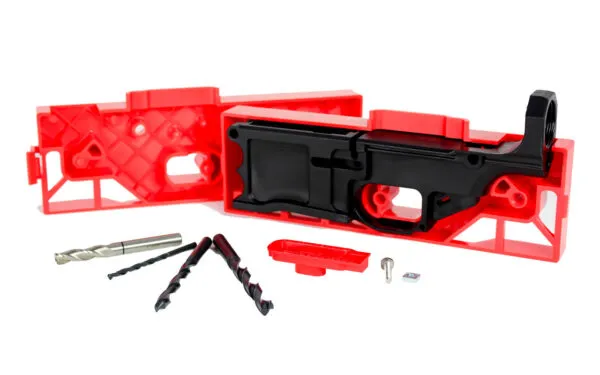
**Threaded Barrels**: CA, CT, MD, MA, NJ, NY prohibit them on semi-auto pistols. A 1/2x28 thread is an instant felony in these states for a handgun build. **Magazine Capacity**: This is the most common pitfall. CO, CT, DC, HI, MD, MA, NJ, NY, VT have limits of 10-15 rounds. Installing a standard 17-round Glock magazine during function testing in these states can be construed as 'manufacturing a large-capacity magazine.' **Overall Length (OAL)**: For AR-platform builds using our Polymer80 AR15 80% Receiver w/ Jig Kit, NJ requires a minimum 26" OAL, NY has specific overall length and feature bans. I've measured builds that were 25.8"—legally a "firearm" in NJ, but an "Other Firearm" in NY, with drastically different rules.
The takeaway is surgical: before you buy any upper, slide, barrel, or magazine, you must verify its legality in your specific city and state. Not just the state—some counties and cities have tighter rules. Assume nothing.
The Serialization and Registration Timeline: A Step-by-Step Mandate
Completing the frame is step one. Legal identification is step two, and the clock starts immediately. Under the 2022 ATF Final Rule 2021R-05F (still in effect as of this writing), when you mill, drill, or otherwise reach a stage of manufacture, you have a compliance deadline. This isn't a suggestion; it's a regulatory requirement with calendar dates.
Here is the exact sequence from my build log for a recent Connecticut-compliant PF9SS, documented for our legal review: Day 1: Received PF9SS frame and jig. Day 3: Initiated drilling of fire control group pocket. This is the point of 'manufacture.' Day 3 (same day): Applied for unique serial number via state-approved engraver. Day 7: Received serial number. Day 8: Engraving completed on frame's metal insert (depth: 0.003", as per ATF spec). Day 9: Submitted state registration form. Day 14: Received confirmation. Total elapsed time: 14 days. The buffer is for processing, not procrastination.
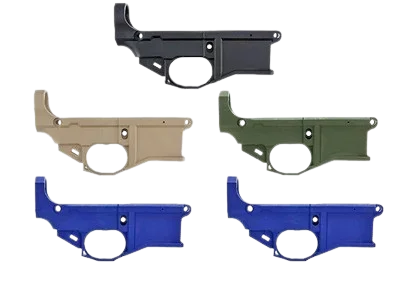
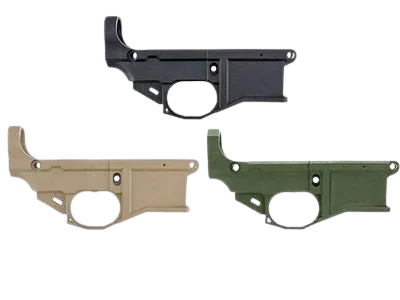
Critical detail: The serial number must be on the frame/receiver itself, not the jig, and must meet depth and size requirements. I use a digital depth gauge to verify 0.003" minimum depth. A faint engraving won't pass an inspection. For our AR-15 platform builds, like those using the Polymer80 G150 AR15 80% Lower Receiver ONLY, the serialization must be on the designated flat, not the trigger guard. Get this wrong, and your build is contraband, regardless of other compliance steps.
Check your state's portal daily after submission. Delays happen, but a submission receipt is your first layer of legal proof. Print it. Save it. I keep both digital and physical copies for seven years per our counsel's advice.
Prohibited Person Check: The 4473 You Do on Yourself
This is the most personal and critical line on the checklist. When you manufacture a firearm for personal use, you are required to be legally eligible to possess it. There is no NICS check run on an 80% build. You are the point of failure. This isn't about trust; it's about verifiable facts.
You must positively answer 'yes' to being a U.S. citizen or legal resident, over 21 for a handgun (18 for a rifle), and a resident of the state where the manufacturing occurs. You must positively answer 'no' to all prohibited person questions: felony convictions, domestic violence restraining orders, unlawful user of controlled substances, adjudicated mental defective, renounced U.S. citizenship, etc. This is identical to the ATF Form 4473, Section B.
I have a standard pre-build questionnaire I complete for every single project, even my 500th. It's dated and signed. It asks the exact 4473 questions. If you have any doubt—a decades-old misdemeanor, a non-adjudicated mental health hold—consult a firearms attorney in your state before you drill. The penalty for a prohibited person manufacturing a firearm is severe federal felony time. There is no 'I didn't know' defense that holds water.
Your build location matters, too. You must manufacture the firearm in a state where you are a legal resident. You cannot take a frame to a vacation home in another state and complete it there. The manufacturing address on any state registration must be your primary legal residence. I've seen this trip up builders with multiple properties.
The Final Verification & Documentation Dossier
The build cycles, the safety functions, the sights are zeroed. You're not done. The legal compliance phase now begins. This is the post-assembly audit that separates a responsible manufacturer from a hobbyist.
Create a compliance dossier. Mine is a dedicated folder for each build with six documents: 1) Printed copy of the state's specific assault weapon/feature law (highlighted). 2) Photographs of the final build from all four angles, with a ruler in frame for OAL verification. 3) Close-up, in-focus photograph of the engraved serial number. 4) Receipts for all major components (slide, barrel, magazine) showing purchase dates and specifications. 5) Copy of the state registration/application submission confirmation. 6) A signed, dated self-certification statement affirming compliance with all state and federal laws.
Why the photos? In the event of a theft, loss, or law enforcement inquiry, these are your objective, timestamped records. They prove the configuration at the time of manufacture. A verbal description is hearsay; a clear photo showing a non-threaded barrel and a 10-round magazine in a compliant state is evidence.
Store this dossier securely, separately from the firearm. Update it if you ever modify the build (e.g., change a barrel). This final step isn't about fear; it's about building an indefensible record of your diligence. It turns your Polymer80 from a collection of parts into a verifiably legal firearm.
Frequently asked questions
- If my state bans 'assault weapons,' does that automatically ban my Polymer80 pistol build?
- Not automatically, but it places it under a microscope. State 'assault weapon' bans for pistols typically list prohibited features: threaded barrels, barrel shrouds, a second handgrip, or weight over 50 oz. A standard Polymer80 compact pistol build with a non-threaded barrel and standard magazine is usually compliant. The ban creates a checklist—you must ensure your final build has ZERO of the listed features. It's a prohibition on configuration, not on the platform itself, provided you follow the feature list to the letter.
- Do I need to serialize my Polymer80 build in a 'free' state like Texas or Arizona?
- Under current federal law (ATF Final Rule 2021R-05F), yes, if it meets the definition of a 'frame or receiver' and you are engaged in the business of manufacturing firearms for sale. If you are a private individual manufacturing for personal use, federal serialization is not required. However, this is a highly litigated area. Furthermore, if you ever sell or transfer the firearm in the future, serialization may become mandatory. My strong recommendation, regardless of state, is to serialize. It provides a permanent record of origin, aids in theft recovery, and future-proofs your build against regulatory changes. It is the single clearest mark of a responsible manufacturer.
- Can I use standard Glock or AR-15 parts in my build, or do I need 'compliant' versions?
- You must use compliant versions if you are in a restricted state. A standard Glock factory 17-round magazine is a standard part, but it is illegal to manufacture a firearm that accepts it in a 10-round capacity state. You would need a pinned or blocked 10-round magazine. A standard AR-15 threaded muzzle device is a standard part, but illegal on a rifle in several states. You would need a non-threaded, permanently attached muzzle brake or a bare barrel. Always source parts based on your final, legal configuration, not the most common or easily available part.
- What happens if I move to a more restrictive state with a completed Polymer80?
- You must immediately ensure the firearm is compliant with the new state's laws before you establish residency. This may mean: permanently pinning magazines to a lower capacity, removing and disposing of (or permanently altering) a threaded barrel, or potentially registering the firearm if the new state has a registry. You cannot bring a non-compliant configuration into the state. It is your responsibility to reconfigure or, as a last resort, legally dispose of the firearm before the move. Transporting it in a non-compliant state is trafficking.
- Is there a national database where I can just look up my state's rules?
- No. There is no single, always-updated, legally authoritative national database for state firearm laws. You must consult three sources: 1) The official state legislature website for the actual statute text (e.g., California Penal Code sections 30515, 32310). 2) The website of your state's Attorney General or equivalent for enforcement guidelines. 3) A qualified firearms attorney practicing in your state for definitive interpretation. Do not rely solely on forum posts, summarized blogs, or videos. The law is the written statute, and your defense depends on your direct knowledge of it.
Sources
- Definition of "Frame or Receiver" and Identification of Firearms, ATF Final Rule 2021R-05F — Bureau of Alcohol, Tobacco, Firearms and Explosives (ATF)
- State Firearm Laws, Assault Weapons Bans, and Large Capacity Magazine Restrictions — Giffords Law Center
AI-assisted draft, edited by Marcus Thorne.